
Oshtemo Township Kalamazoo-Area Directory Holdings
Kalamazoo Public Library Local History holds the main historical shelf for this work. Its Kalamazoo sources page describes a long run beginning in 1860, mostly in paper and some microfiche. The same source cautions that the run is not necessarily annual, although alternate years are often present. A separate Local History page describes R. L. Polk & Co. Kalamazoo directories from 1860 through 2018. Those statements support a long, uneven Kalamazoo-area run. They do not establish that every Oshtemo Township household appears, or that every volume survives. Use the printed source as a dated entry, then test the place label and address against other records.
| Collection | Years documented | Where held | How to use it |
|---|---|---|---|
| Kalamazoo city directories | Beginning 1860, gaps and frequent alternate years | KPL Local History | Mostly paper, with some microfiche |
| R. L. Polk & Co. Kalamazoo directories | 1860–2018 on the cited KPL page | KPL Local History | Confirm the individual volume before relying on it |
| National Archives cross-check | 1927, 1929, and 1931 | National Archives microfilm listing | Use for those named Kalamazoo years |
| Reverse or criss-cross reference | Kalamazoo 1945 reference located | Library of Congress guide | Exact local run remains unconfirmed |
A missing name or blank year has several possible causes. A person may have moved, used a rural route, appeared under another spelling, fallen outside the publisher's scope, or simply faced a year without a volume. It is not proof that a property was vacant or that a person died. Record the unsuccessful year, check the years on either side, and then use a deed, newspaper, vital, cemetery, or probate source to resolve the gap.
Oshtemo Township City Directory Scope
Oshtemo is a charter township, not a city. That distinction matters when working with city directories. A Kalamazoo printing may list an Oshtemo-area address under a Kalamazoo postal line, or may omit a rural or township address altogether. Neither outcome settles the governmental unit. For a historical address near a boundary, preserve four separate facts: the directory's recorded entry, its postal or place label, the parcel location, and any inference drawn from comparing them. The county parcel detail's Gov Unit field is the current routing check for a property that might use Kalamazoo in its mailing address.
Historical borders can also differ from the current outline. KPL describes Oshtemo as a 36-section township surveyed in 1830 and organized independently in March 1839. Its historical borders touched Alamo, Kalamazoo, Texas, and Van Buren townships. Those details help place an old entry, but they do not turn a Kalamazoo-area city directory into township-wide coverage. Note: A postal city line is useful for mail routing, not proof of present or historical municipal jurisdiction.
Oshtemo Township Directory Research Desk
KPL Local History is on the Central Library's second floor at 315 S Rose St, Kalamazoo. The department phone is 269-553-7808. Hours are Monday through Thursday, 9 a.m. to 8 p.m.; Friday, 9 a.m. to 6 p.m.; Saturday, 10 a.m. to 5 p.m.; and Sunday, 1 p.m. to 5 p.m. The collection brings directories together with maps, atlases, local newspapers, yearbooks, genealogy materials, and microfilm. That combination is helpful when a printed address needs a map-year check or a newspaper citation rather than a guess about the household.
Local History access
Central Library, second floor, 315 S Rose St, Kalamazoo. Call 269-553-7808 for collection help.
Useful companion material
Directories, Gazette microfilm, maps and atlases, vital-record cards, and genealogy holdings provide different dated clues.
The KPL Local History collection shows the department and its collection paths.
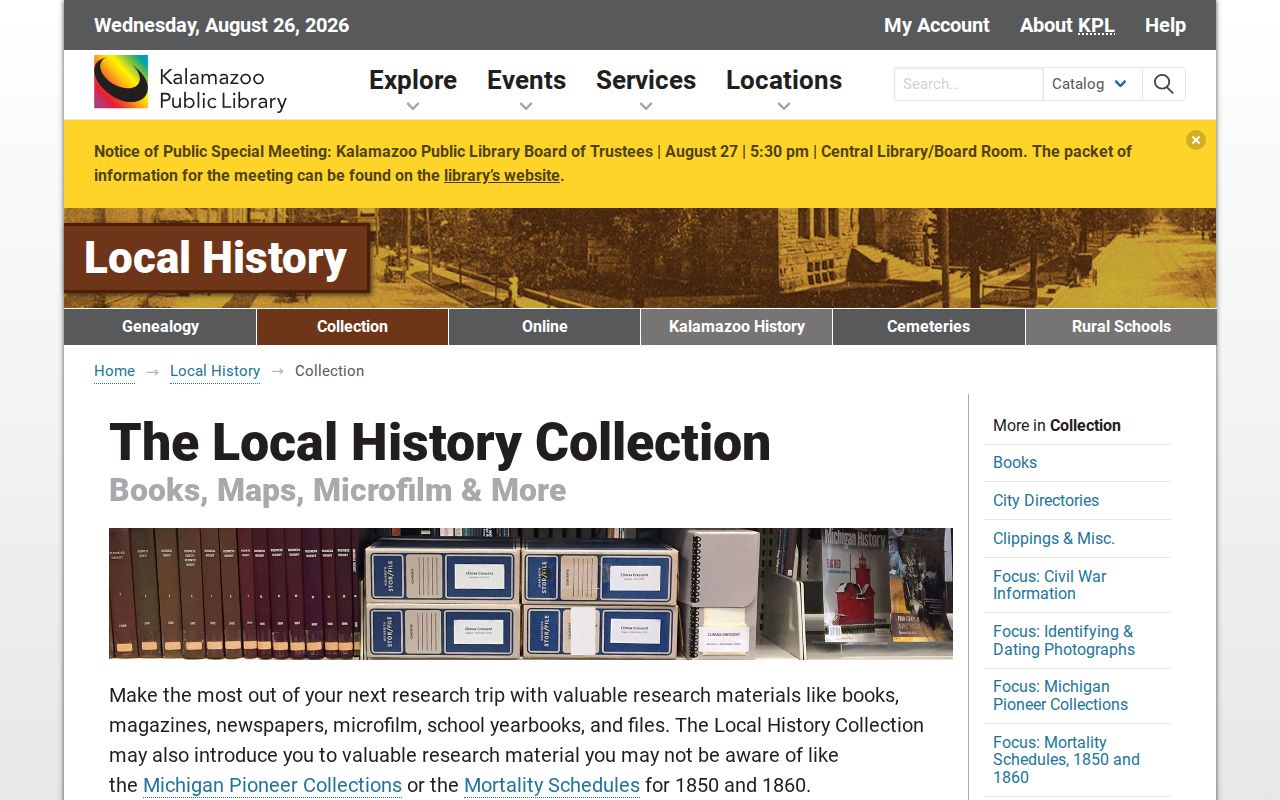
The library setting is important because a search may need a paper volume, a microfilm reel, and a map or newspaper reference in the same visit.
The KPL Kalamazoo sources page identifies the directory run, early deed microfilm, and the dated map and atlas shelf.
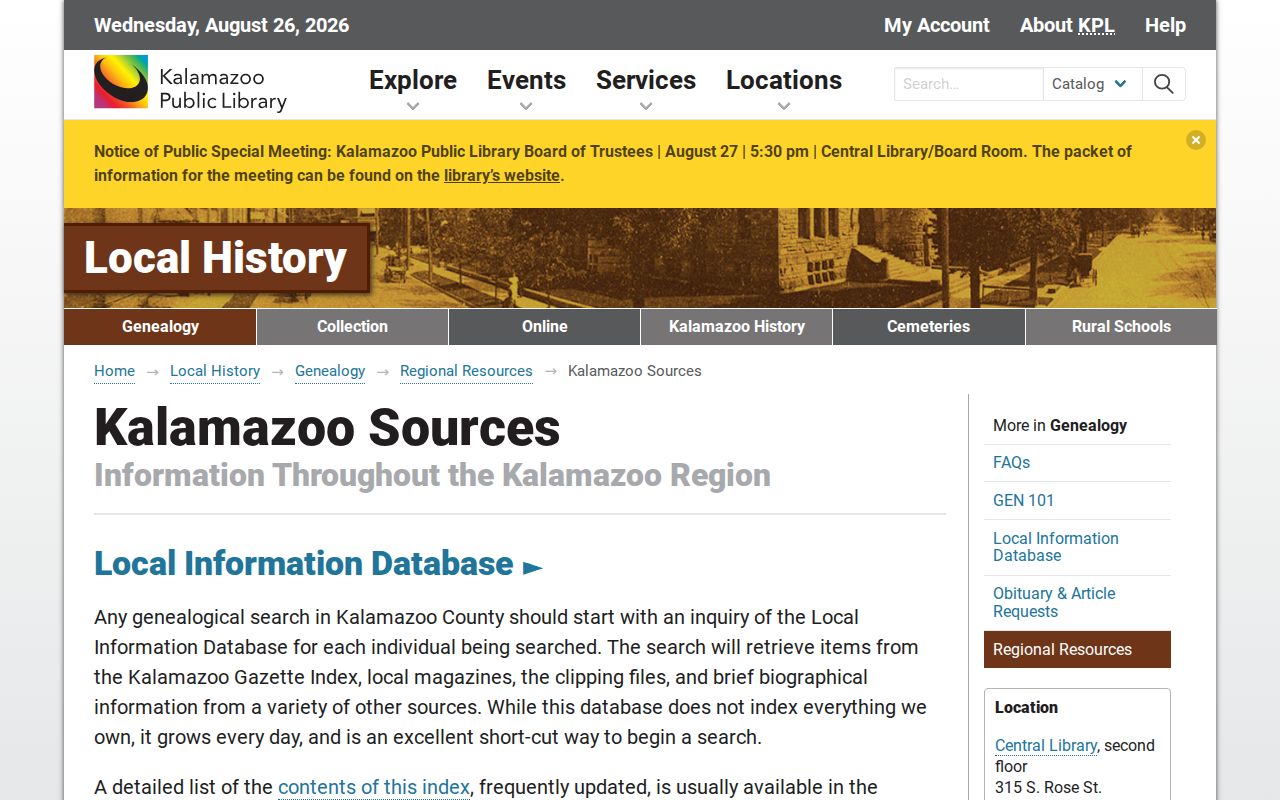
Use that source list to choose the next record type after the directory entry, rather than assuming one volume resolves an address history.
Reading Oshtemo Township Directory Entries
Start with the exact historical street and then search the name index. Inspect the page image or paper volume, rather than relying on a transcription alone. The entry should be copied as it appears. Keep the spelling, household or business label, printed street line, city or township label, year, volume, page, and any cross-reference. A business entry can anchor an address history, but it is not evidence of a residence. Later comparison is easier when the record is described as a printed entry for a specific year rather than as an unqualified claim about where someone lived.
| Printed name | Retain initials, suffixes, and spelling exactly as shown. |
|---|---|
| Household or business label | Identify which kind of entry it is before using it as a family or address clue. |
| Street and place label | Copy the street line and printed Kalamazoo or township wording without modernizing it. |
| Volume citation | Keep the year, volume, page, and any cross-reference. |
| Later comparison | Record the parcel match and unresolved spelling or boundary issue separately. |
- Criss-cross directory
- An address-to-name arrangement used to start from a street line instead of a person. The Library of Congress guide explains the method, but the exact local run is not confirmed.
- Householder index
- A name arrangement used to locate the printed household entry before checking its page and address.
- Abbreviation key
- A volume's own explanation of shortened labels and marks. Check that key before assigning meaning to a notation.
When the name disappears, compare the adjacent available years first. Then corroborate with a Gazette citation, a deed, a vital or cemetery source, or a probate case. This sequence respects the limits of the city directories and reduces same-name mistakes.
Oshtemo Township Gazette Directory Clues
KPL's Local Information Database contains more than one million items. Its Gazette general index runs from 1972 forward, while the fuller subject and personal-name coverage begins in 1968, subject to category exclusions. Public notices and circuit-court sentencing begin in 1984. Marriage licenses and divorces stop at about October 15, 2013, and birth indexing stops at about January 5, 2016. Gazette microfilm is nearly complete from 1834 to the present, and the clipping files are strongest from 1928 through 1968. A citation can identify a headline, date, section, page, column, and whether a photo appears, but the underlying page still needs inspection.
The KPL Local Information Database is the index doorway for those local citations.
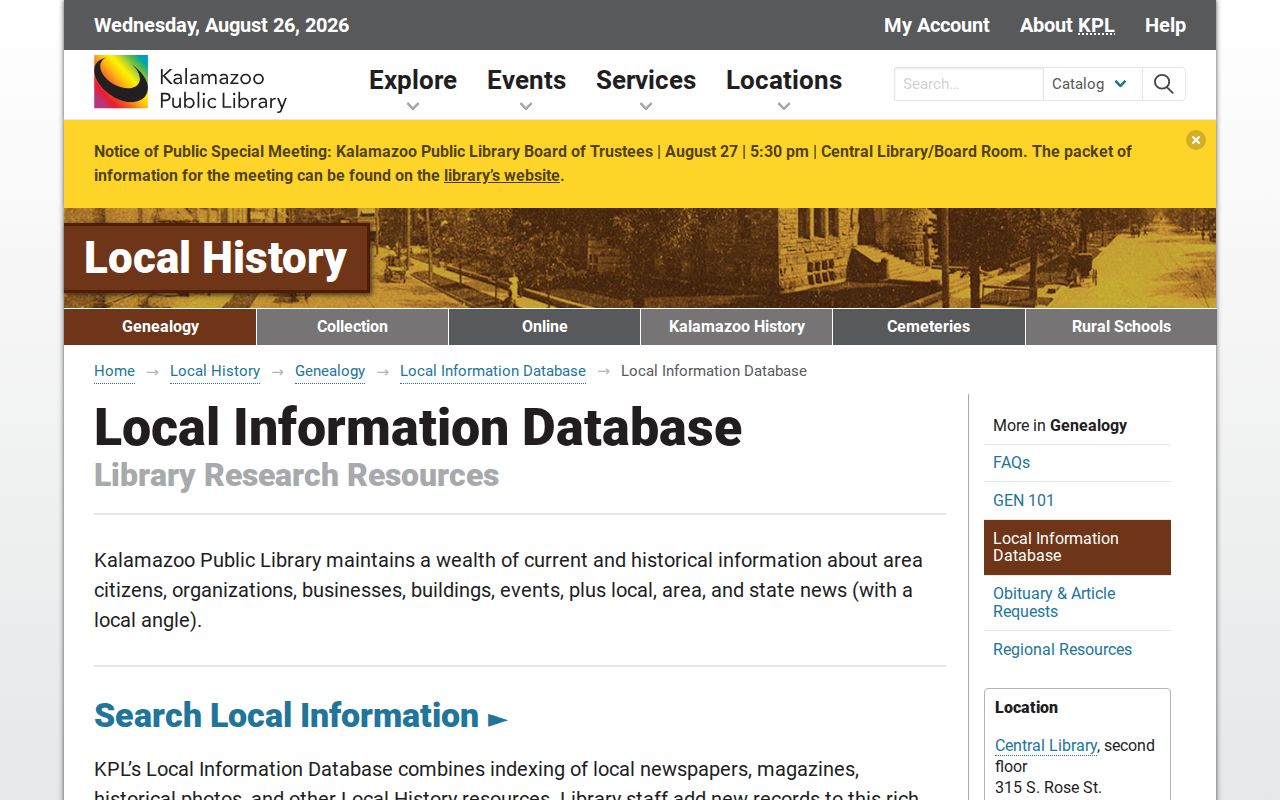
Pair a newspaper citation with the directory year and page, so the two sources remain distinct rather than being blended into one unsupported timeline.
The Meader Historical Directory is another historical companion. Robert E. Meader compiled 36 volumes in the 1930s and 1940s. They are indexed and digitized, with biographical sketches often running three to four pages and sometimes including family details or a portrait. Those volumes add historical context. They are not a current-resident source.
Oshtemo Township City Directory Checks
The National Archives identifies Kalamazoo directories for 1927, 1929, and 1931 on microfilm. Those are useful cross-check years when a KPL volume or a name spelling needs confirmation. They remain Kalamazoo directories, so the same scope caution applies to an Oshtemo Township address. The reference does not document a township-wide collection or every intervening year.
The National Archives city-directory resource identifies the microfilm research path.
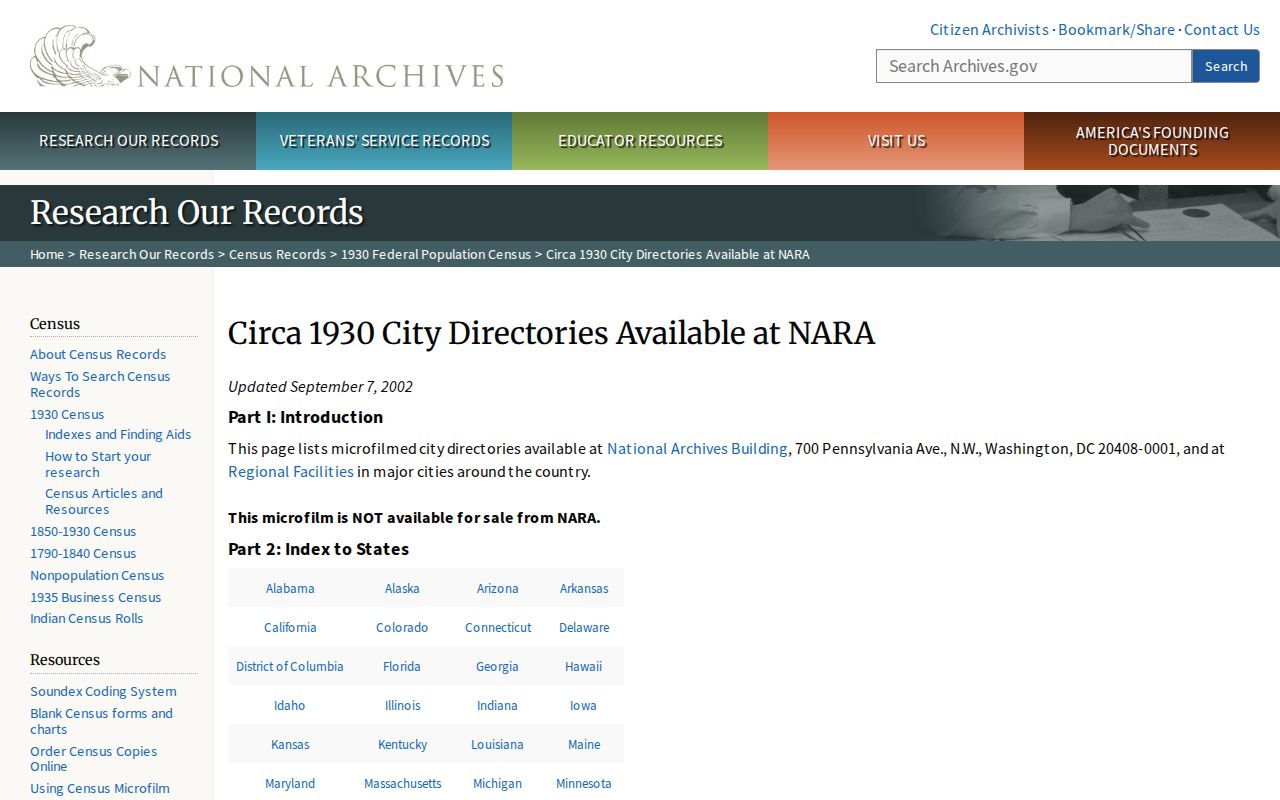
Use the named microfilm years to test a specific historical entry, not to fill an unsourced span between volumes.
Trace an Oshtemo Township City Directory Name
A city directory becomes more reliable when it is treated as one point in a dated trail. Begin with the exact spelling in one available volume, then retain each later citation in its own row of notes. An available census schedule may provide a household-level comparison where its legal access permits it, but it should not be assumed to supply the same coverage or place label as the directory.
- Find the first available printed entry for the known name or address.
- Copy the year, volume, page, spelling, street, and place label before searching another source.
- Compare the next available directory years for an address change, alternate spelling, or new household or business label.
- Check a deed legal description, map or atlas, and current parcel Gov Unit when the printed address is near a boundary.
- Use Gazette, probate, vital, cemetery, or archive material to corroborate a move, death, transfer, or family connection.
Maps and atlases help test whether a street or land division existed in the period. KPL lists 1853, circa 1855, 1861, 1873, 1890, 1910, 1913, circa 1919, 1928, 1953, 1958, 1960, 1964, 1966, 1969, 1972, 1974, 1977, 1979, 1983, 1986, 1989, 1991, 1993, and 1996. A map year helps frame an address. It does not identify a person at that address.
Oshtemo Township Directory Boundary Checks
The Oshtemo Historical Society can supply local context for a place, including the Drake House project, but it is not a searchable resident roster. Use a local-history organization, a city-directory entry, and a county parcel record for their separate strengths. For a difficult address, compare the printed line, a dated map or plat, the recorded legal description, and the current parcel identity. That preserves uncertainty instead of silently converting a Kalamazoo postal label into a claim about Oshtemo Township jurisdiction.
The Oshtemo Historical Society describes its local-history work and contact path.
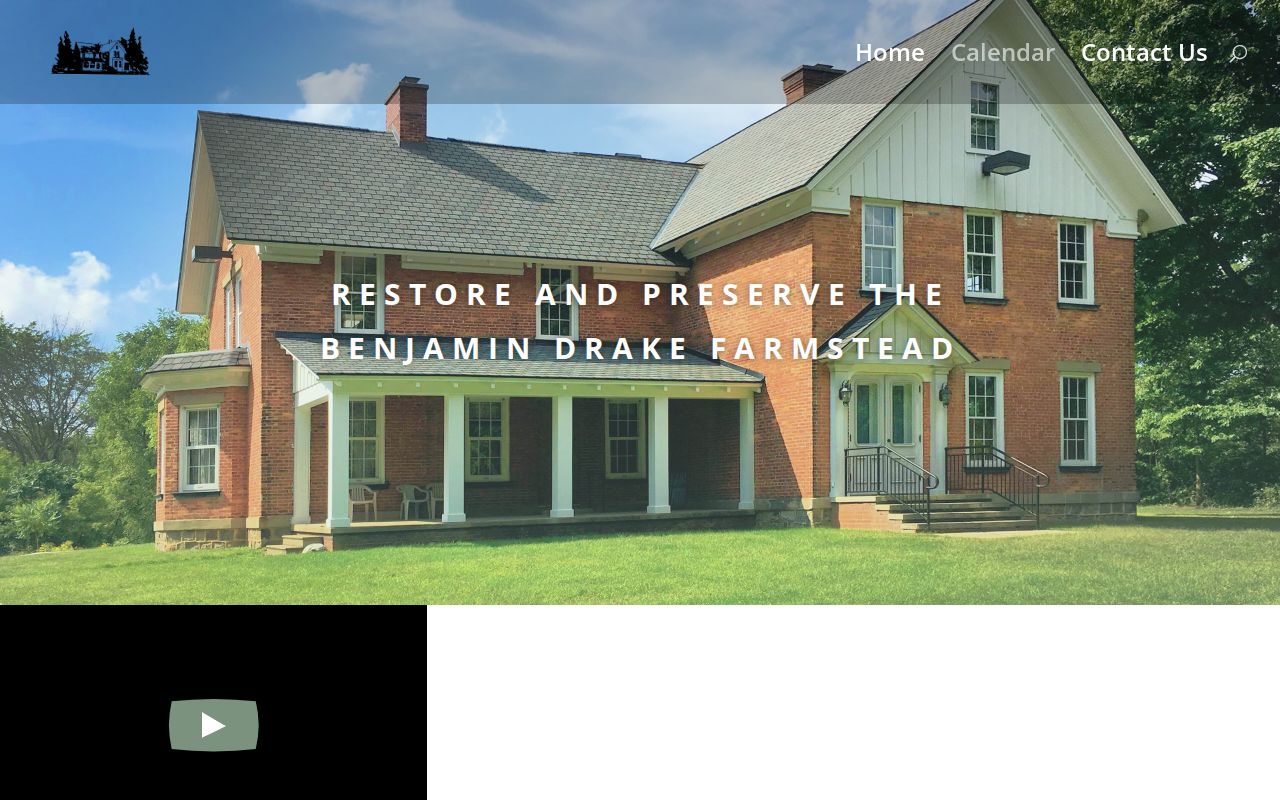
Its historical context can guide a focused follow-up question, while the dated directory page remains the evidence for the printed entry itself.
Note: A blank directory year is an unresolved research result, not proof of vacancy, death, or a change in township jurisdiction.