
Oshtemo Township Resident Lookup Records
A resident lookup should answer one stated question at a time. The county parcel record can identify an owner of record and distinguish a mailing address from a property address. Michigan's voter tools are designed for an individual registration, polling-place, and district inquiry. Court and probate indexes report case activity, not a person's current home. Vital indexes and historical sources help with family-history questions under their own access rules. Keep the record type, result date, and any case or parcel identifier beside every result.
| Record | What it can confirm | Where it is kept | Access route |
|---|---|---|---|
| Parcel record | Owner of record, mailing and situs fields, parcel details | Kalamazoo County Parcel Search | Search by owner, parcel ID, or street |
| Voter registration | Registration, polling place, and district information | Michigan Voter Information Center | Individual lookup, with statutory redactions |
| Court index | Public case information tied to a name or case number | MiCOURT Case Search | Informational public search, then clerk confirmation |
| Vital index | Recorded birth, marriage, or death event within access limits | Kalamazoo County Vital Records | Index, genealogy viewing, or eligible certified-copy request |
| Probate index | Estate case, fiduciary, file date, and indexed entries | Kalamazoo Probate | Current online index and historical office or microfilm route |
For a question about a specific parcel, begin with the parcel result. For a question about voting, use the voter lookup rather than an owner name. An heir or deceased-person question may call for the vital and probate routes. A court name hit needs a case number, court, and date before it is useful. These boundaries keep an Oshtemo Township resident lookup from turning one loose match into an unsupported conclusion.
Oshtemo Township Voter Lookup
The Michigan Voter Information Center is the official individual route for registration, polling-place, and district information. It is not an address-history database or a township-wide resident roll. Michigan's Qualified Voter File has public fields, including name, residence address, city, state, ZIP, jurisdiction, precinct or ward, and five-year voting history. Public production excludes sensitive elements, including month and day of birth, identification numbers, phone number, and signature under MCL 168.509q.
Record the lookup date if an individual checks their own registration or uses a permitted civic inquiry. An inactive or canceled status does not prove when someone moved. Michigan does not register party affiliation, and a primary ballot choice is not a permanent party record. The Secretary of State voter guidance also makes clear that public availability has limits. Do not republish a residential address or attempt to collect names block by block.
Note: A voter result should be labeled as a registration result on its lookup date, not as proof of present occupancy or ownership.
Oshtemo Township Court Lookup
MiCOURT Case Search accepts a person or business name and a case number. Its filters include case type or category, year, status, judge, and public or suppressed status. The public search is informational rather than the official court record. Several classes are excluded or protected, including many juvenile, adoption, mental-health, guardianship, personal-protection, and suppressed matters. A same-name result therefore needs confirmation with the court clerk before it is connected to an Oshtemo Township resident.
| Search field or filter | How to use it carefully |
|---|---|
| Person or business name | Try spelling variants, middle initials, and suffixes without assuming a match is the right person. |
| Case number | Use it to return to the same court matter and to ask the clerk for the official file. |
| Case type, category, year, status, judge | Narrow a broad name search and preserve the filters used with the result date. |
| Public or suppressed status | Recognize that unavailable material is not evidence that no case or record exists. |
Oshtemo is a charter township, and no separate municipal court portal was located. The county court directory routes matters among the 8th District, Circuit, and Probate courts. If the question concerns an ordinance file or a civil infraction, confirm whether it was filed in district court or retained in township records before requesting it.
Note: MiCOURT labels are informational, so a clerk request or verified case number is needed before relying on any court result.
Oshtemo Township Vital Indexes
Kalamazoo County genealogy access provides a more suitable route for documented family-history questions than a general person search. Birth records begin in 1867 and have a restricted index. They may be viewed free after 110 years, while certified access has a 100-year rule. Marriage records run from 1831 and death records from 1867. Their indexes are available, and free viewing begins after 75 years; certified copies have separate eligibility and ordering rules.
Viewing an index is not the same as obtaining a certified copy. County materials distinguish genealogy viewing from copying or photographing some in-person material, and a certificate request must meet the custodian's requirements. An event can help distinguish two people with the same name, but it does not itself establish a current address. Use it with the event date, place, and another official identifier such as a probate case number or a recorded instrument.
Oshtemo Township Probate Index
A probate entry can be an important family-history or documented heir lead. Kalamazoo Probate has a current, real-time index for cases from 1995 forward and active older cases. The index reports a case number, type, status, file date, attorney, fiduciaries, and document-index entries. It does not place document images online. Older probate research moves to files and microfilm, with records reaching back to 1832 and microfilm covering 1832 through 1990.
The Probate records page shows the name and case-number approach used for this index.
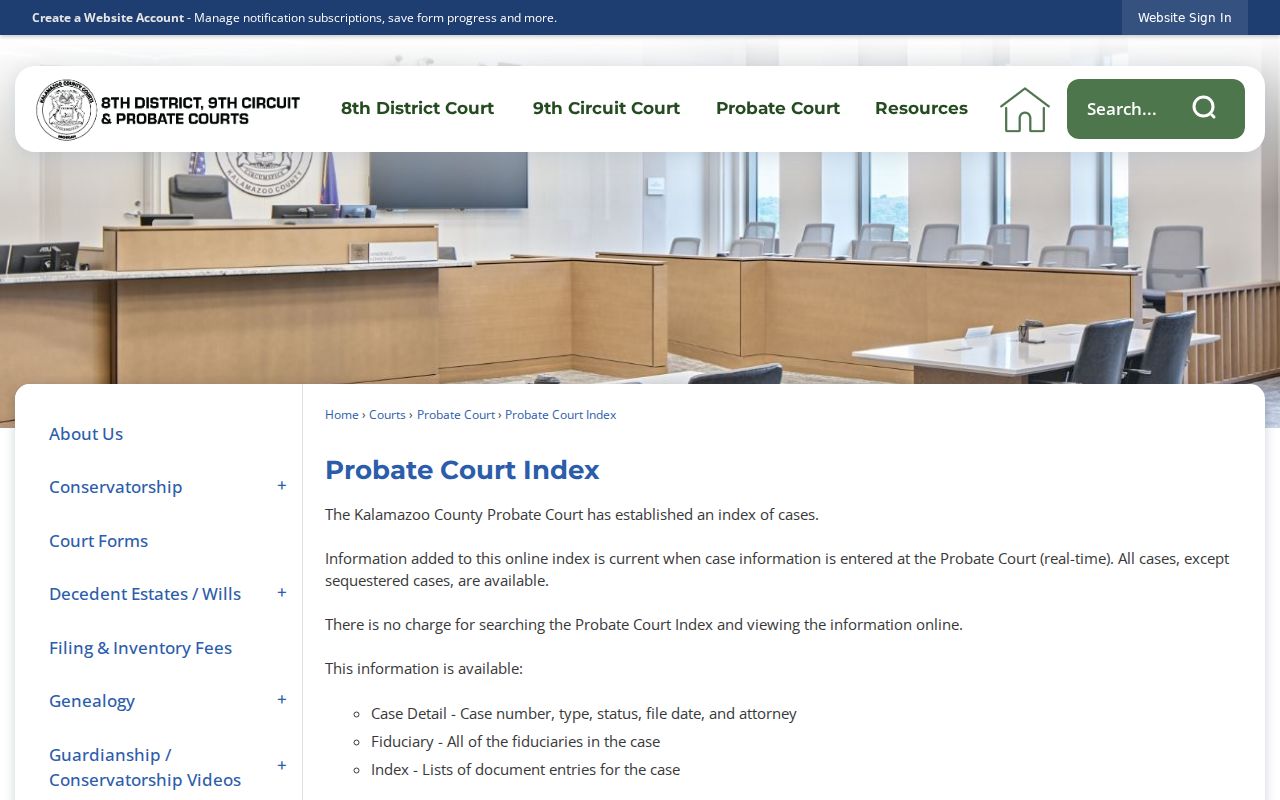
Use the visible case number to ask the proper custodian about access, then compare fiduciary, date, and property context before treating an entry as the same person.
The online index is a starting point, not an heirship decision. An estate lead should be checked against the case, vital rules, and any relevant deed history. For historical printed name and address context, the Oshtemo Township directory book offers a separate collection-based trail.
Verify an Oshtemo Township Resident
Use a short verification chain instead of one broad search. The aim is to attach a name to the right record, not to state that every record describes the same living person. Each step has a different job, and every conflict should stay visible in the notes rather than being silently reconciled.
- Write the full name, known spelling variants, and the question being checked. Add the date of each search.
- Choose the direct record: a parcel result for an owner of record, MVIC for registration or polling information, or a vital index for a documented event.
- Use MiCOURT or Probate only when a case-related question exists. Preserve the court, case number, result status, and any other distinguishing details.
- Compare at least two non-sensitive identifiers, such as a middle initial, record date, parcel reference, fiduciary, or legal description.
- Request an official copy or confirm with the clerk when the matter requires a custodian-level answer.
- Docket
- A court's running record of filings and events in a case. A docket entry does not prove a separate person's identity.
- Index and image
- An index points to a record through names, dates, or numbers. An image is the document view, when the custodian makes one available.
- Certified copy
- A custodian-issued copy bearing the certification required for the purpose at hand. It is different from an online index view.
When the records point in different directions, preserve the difference. A move, a misspelling, an old mailing line, or two people with the same name can explain a mismatch, but none should be assumed without another record.
Oshtemo Township Result Fields
A careful resident lookup records what each result actually displayed. That small inventory makes it easier to see whether two records have a real connection or merely share a name. It also avoids turning a court participant, a historical resident, or a parcel owner into a claim about current residency.
- Parcel result: parcel number, owner of record, mailing and situs fields, governmental unit, legal description, and assessment date when shown.
- MVIC result: registration, polling place, and district information, plus the date the lookup was checked.
- MiCOURT result: court, case number, case category, status, and the filters that produced the result.
- Probate index: case number, type, status, file date, attorney, fiduciary, and document-index entry.
- Vital index: event type, names, event date or year, and the access level, without publishing restricted details.
These fields support a source label such as “owner of record,” “registered at address on lookup date,” “court-index participant,” or “historical directory entry.” That wording is more accurate than calling someone a current resident based on one result.
Oshtemo Township Record Boundaries
Specialized state tools answer narrow questions. MiPLUS verifies regulated professional licenses, not a home address or an identity beyond the license result. Its public information may show licensee status, issue or expiration details, and disciplinary information. A professional record can be useful for civic transparency or a documented seller-safety question, but it should not be converted into a personal profile.
The MiPLUS verification page illustrates the state license route.
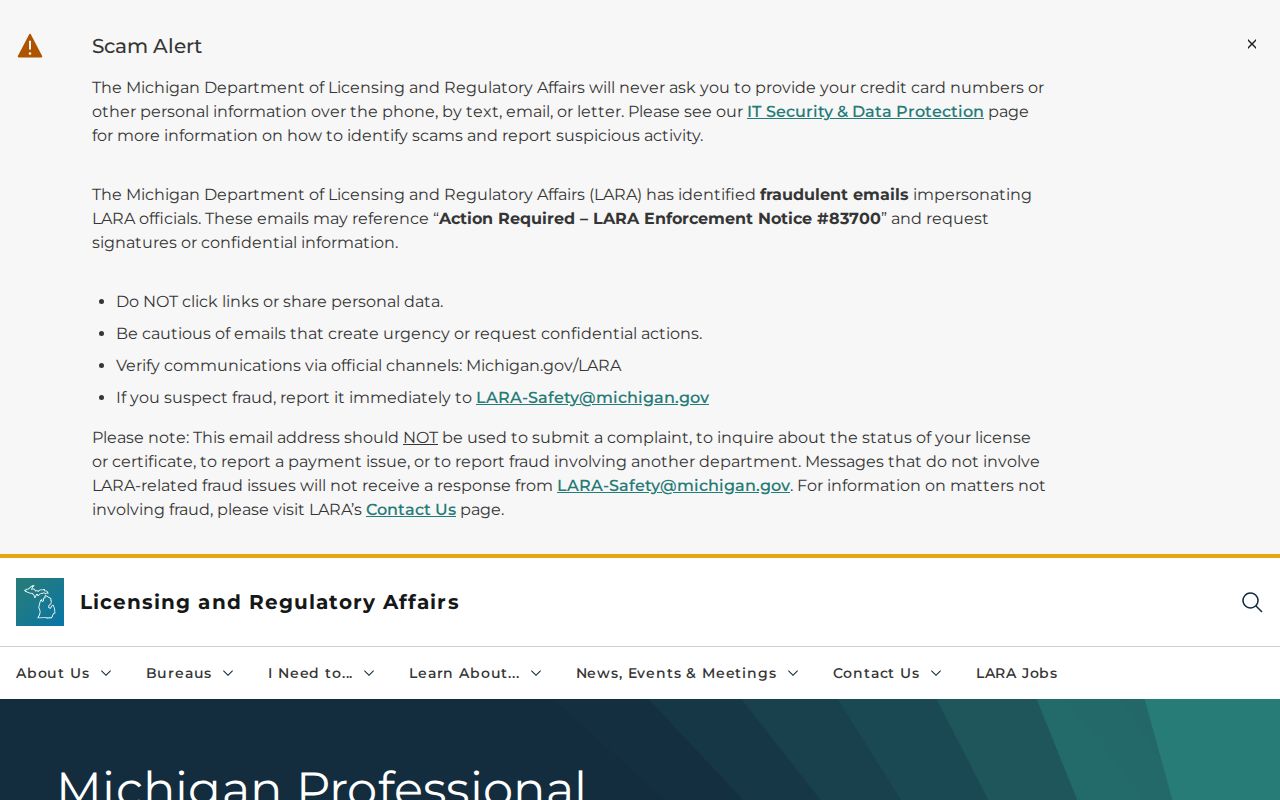
The screen supports checking a license entry within its stated category. It does not turn an address field into proof that the licensee lives there.
OTIS, ICHAT, and the registry described below are also not interchangeable. ICHAT is a $10 name-based state criminal-history search with stated exclusions. OTIS covers people currently supervised and those discharged within three years. Neither is a complete criminal history, county-jail list, or resident lookup.
Note: A specialized record that is absent, limited, or incomplete should not be read as proof of identity, location, or history.
Oshtemo Township Safety Search Limits
The Michigan State Police registry is a public-safety tool with its own limits. Registry search permits a name, address component, registration number, or MDOC number inquiry. Its neighborhood map offers radius choices from one-quarter mile to five miles. Juveniles and protected information are excluded. A registry result should be read with its status and official definitions, then confirmed through the responsible agency if the result matters for safety.
The OTIS search shows the distinct state-supervision route.
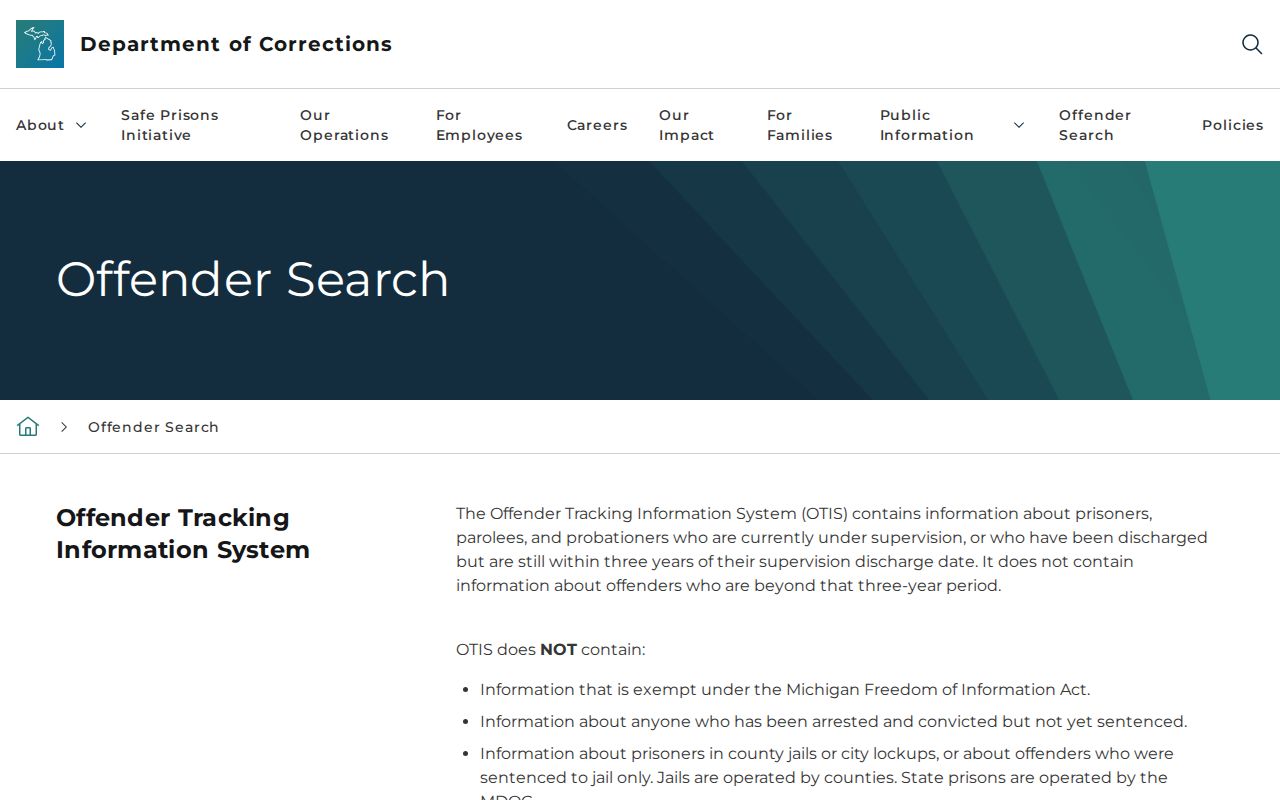
OTIS results use the name at commitment and have a three-year discharge limit, so they require careful identity checks.
The Michigan registry search demonstrates the public-safety search options.
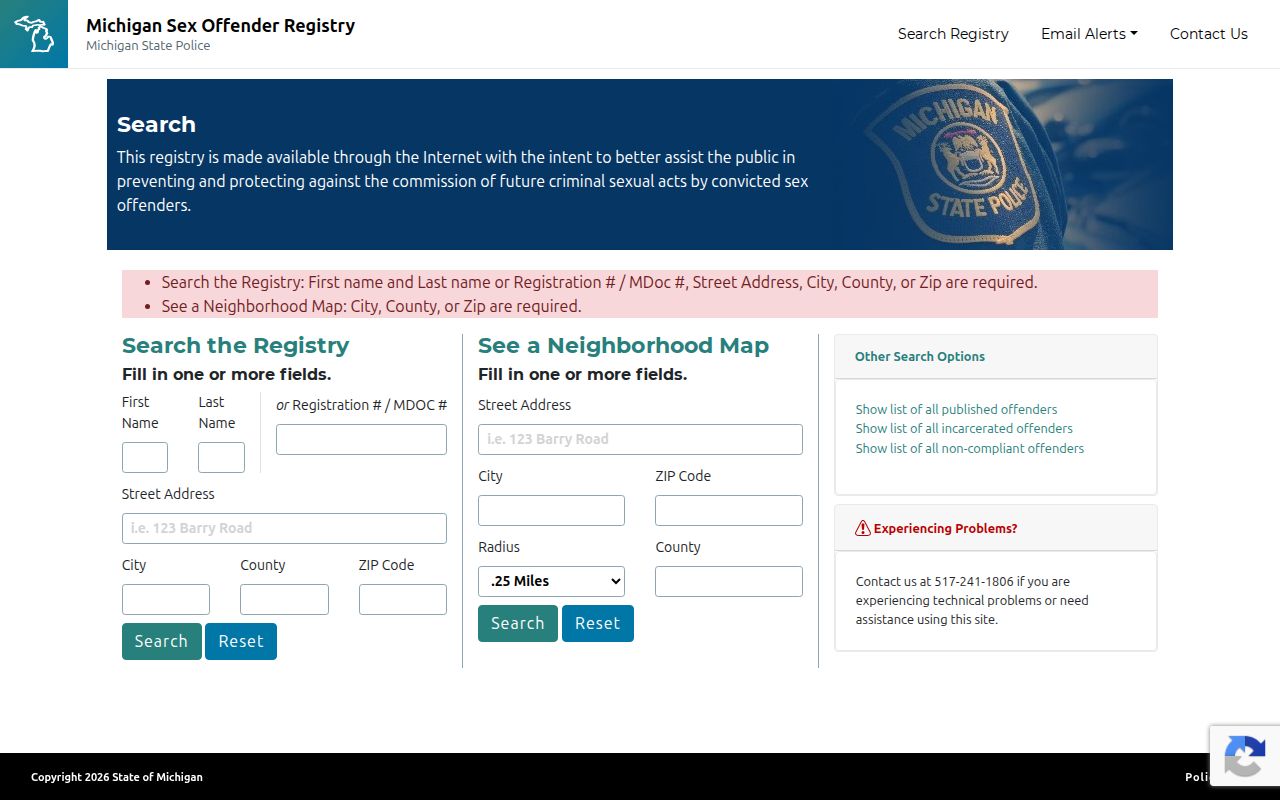
Use a safety result only for its stated purpose. A same-name hit, an omitted result, or a distance setting does not decide where a person lives.
Resident Lookup Legal Limits
Michigan FOIA, MCL 15.231 et seq., provides an access path for public township records, but it does not override record-specific restrictions. Oshtemo's FOIA process allows a written request for a defined record, date range, format, or parcel. It is not a route to protected voter, vital, driver, court, juvenile, or sealed information. Narrow requests give the Clerk a clear custodian, subject, and record type to evaluate.
The Michigan Address Confidentiality Program provides qualifying survivors and victims with a protected substitute address. That address is confidential and is not a lead for finding someone. Michigan's stalking law, MCL 750.411h, covers a course of conduct involving two or more unconsented acts. Limit research to a lawful purpose, avoid repeated searching or contact, and ask the responsible custodian about a record-access or correction issue.
Lawful use. Use Oshtemo Township resident lookup records for personal, lawful research and documented civic or family-history questions. Do not use a record to stalk, harass, intimidate, or harm any person.